How to Increase Fiber Without Bloating (The Actual Pacing Plan)
The core rule behind avoiding bloating on a fiber increase is straightforward and backed by gastroenterology guidance: increase fiber by no more than 5 grams every 3-4 days, rather than jumping from a baseline intake to a target number in one step. A gut microbiome that processes 12 grams of fiber a day does not have the bacterial population built up to immediately handle 30 grams — that population shifts over roughly two to three weeks of consistent higher intake, and symptoms during that window are the visible sign of that adjustment happening.
Water intake needs to scale in parallel, not follow after symptoms show up. A commonly used formula among dietitians is an additional 8 ounces of water for every 5 grams of fiber added above baseline. Someone moving from 15 to 30 grams of daily fiber should expect to add roughly 24 ounces of water on top of their normal intake, spread across the day rather than consumed in one sitting.
Timing fiber intake also affects how noticeable symptoms are. Spreading fiber across three meals rather than concentrating it into one very high-fiber meal reduces the fermentation load hitting the gut at any single point, which tends to reduce peak bloating even at the same total daily gram count.
If bloating persists past three weeks of gradual, well-hydrated increases, that's a signal worth discussing with a doctor rather than pushing through — for a small percentage of people, particularly those with undiagnosed IBS, high fiber intake genuinely doesn't agree with the gut regardless of pacing, and the fix in that case is a different approach, not more patience.
Where do you stand right now?
Run the numbers against your age and current intake.
Open the calculator↗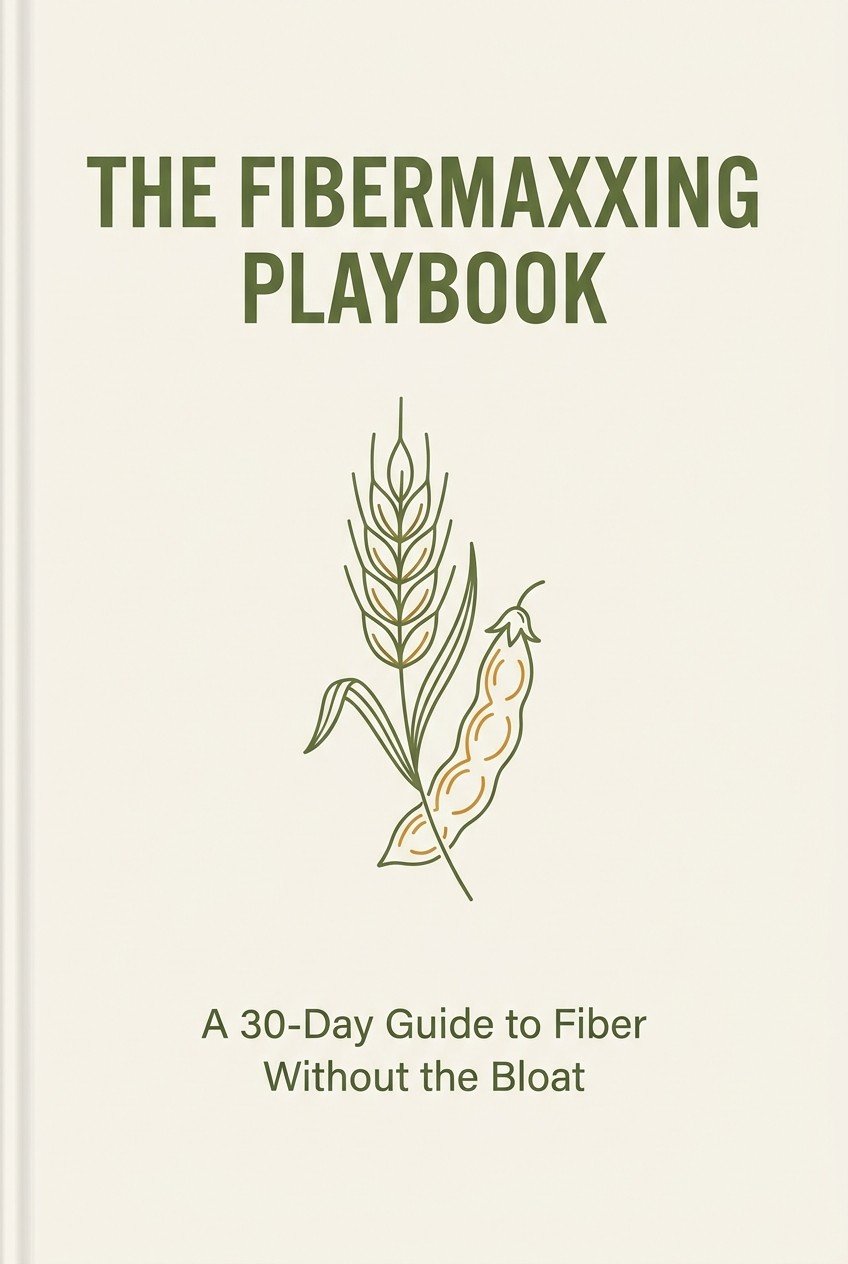
Want the full 30-day plan?
The Fibermaxxing Playbook has the week-by-week ramp schedule, 20 recipes, and a troubleshooting guide for bloating — everything in this article, plus the parts that don't fit in a blog post.
Get the ebook — $14.99↗