Does Fibermaxxing Actually Help With Weight Loss?
Fiber's connection to weight management is real but indirect, and it's worth separating from the more aggressive claims that circulate alongside diet trends. High-fiber foods tend to be lower in calorie density and higher in volume, which increases fullness per calorie consumed — a cup of lentils at roughly 230 calories is considerably more filling than 230 calories of most other foods, largely because of both the fiber and the water content.
Soluble fiber specifically slows gastric emptying, which extends the feeling of fullness after a meal and has been shown in research to modestly reduce total calorie intake later in the day when a high-fiber meal is eaten earlier. This is less about fiber 'burning fat' — a claim that shows up often in social media framing and isn't supported — and more about fiber changing appetite signaling in ways that make a moderate calorie deficit easier to sustain without feeling restrictive.
The calorie displacement effect matters as much as the appetite effect. A meal built around beans, vegetables, and whole grains structurally has less room for the higher-calorie-density foods, refined carbohydrates, and added fats that tend to drive excess calorie intake. Increasing fiber often reduces overall calorie intake as a side effect of what it replaces, not because of a direct metabolic mechanism.
None of this makes fiber a weight-loss intervention on its own. The research support is for fiber as one lever among several — alongside protein intake, overall calorie balance, and activity — not as a standalone strategy. Content that frames fibermaxxing as a fast or primary weight-loss method is overstating what the underlying research actually shows.
Where do you stand right now?
Run the numbers against your age and current intake.
Open the calculator↗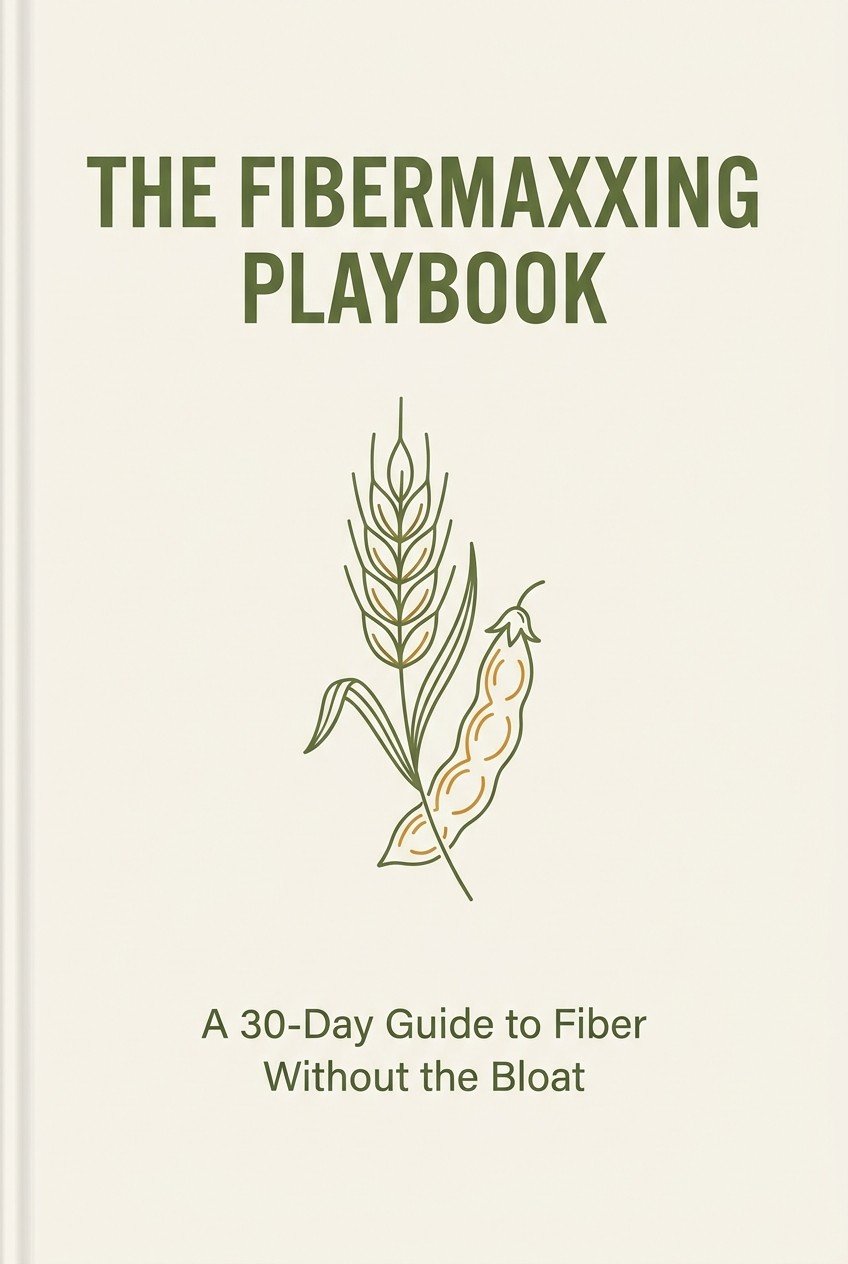
Want the full 30-day plan?
The Fibermaxxing Playbook has the week-by-week ramp schedule, 20 recipes, and a troubleshooting guide for bloating — everything in this article, plus the parts that don't fit in a blog post.
Get the ebook — $14.99↗